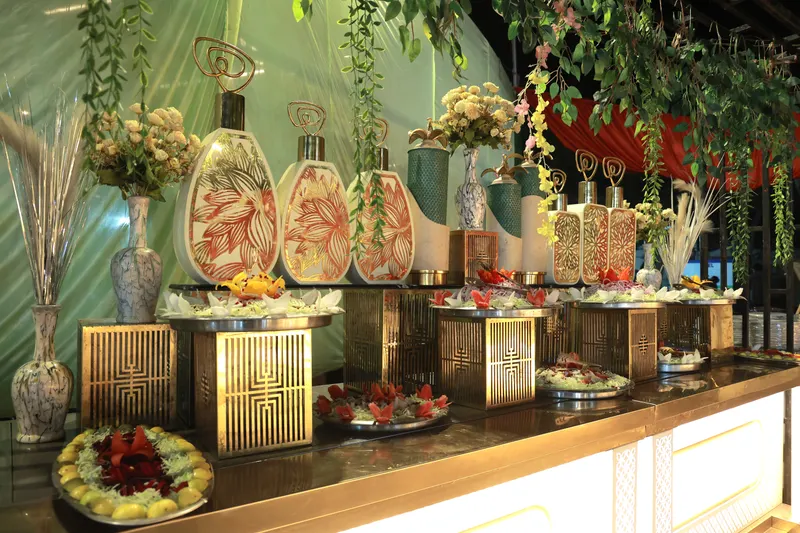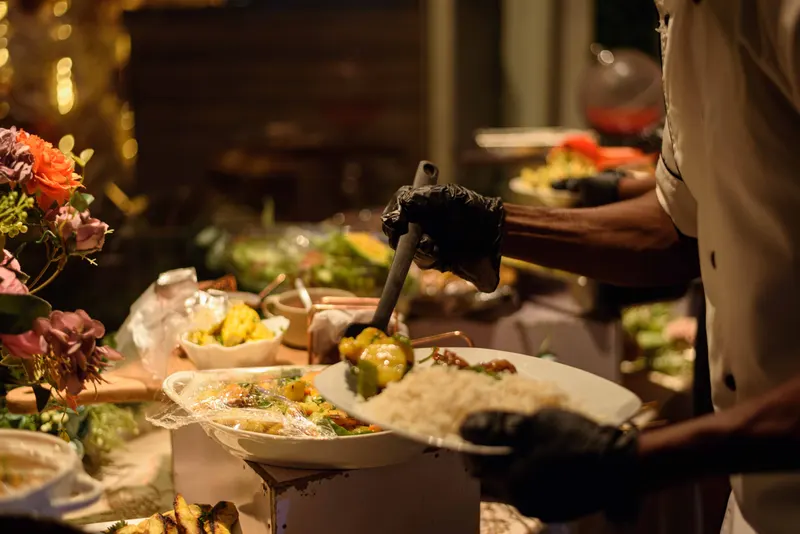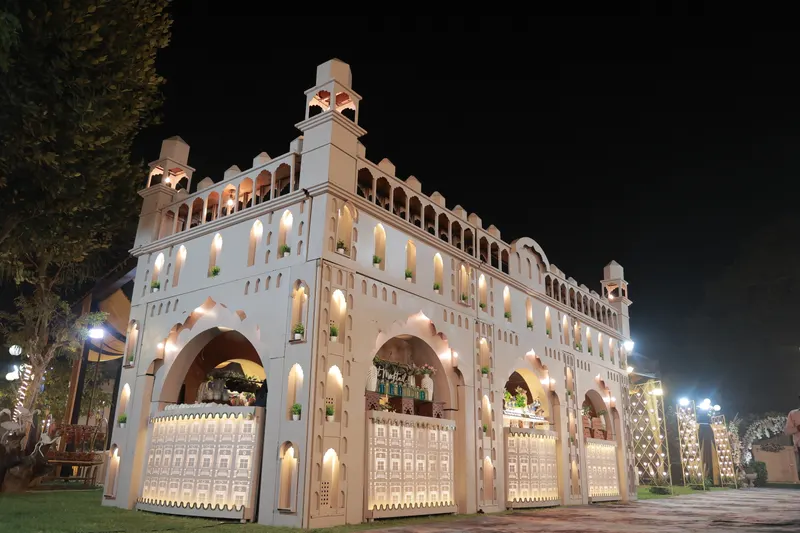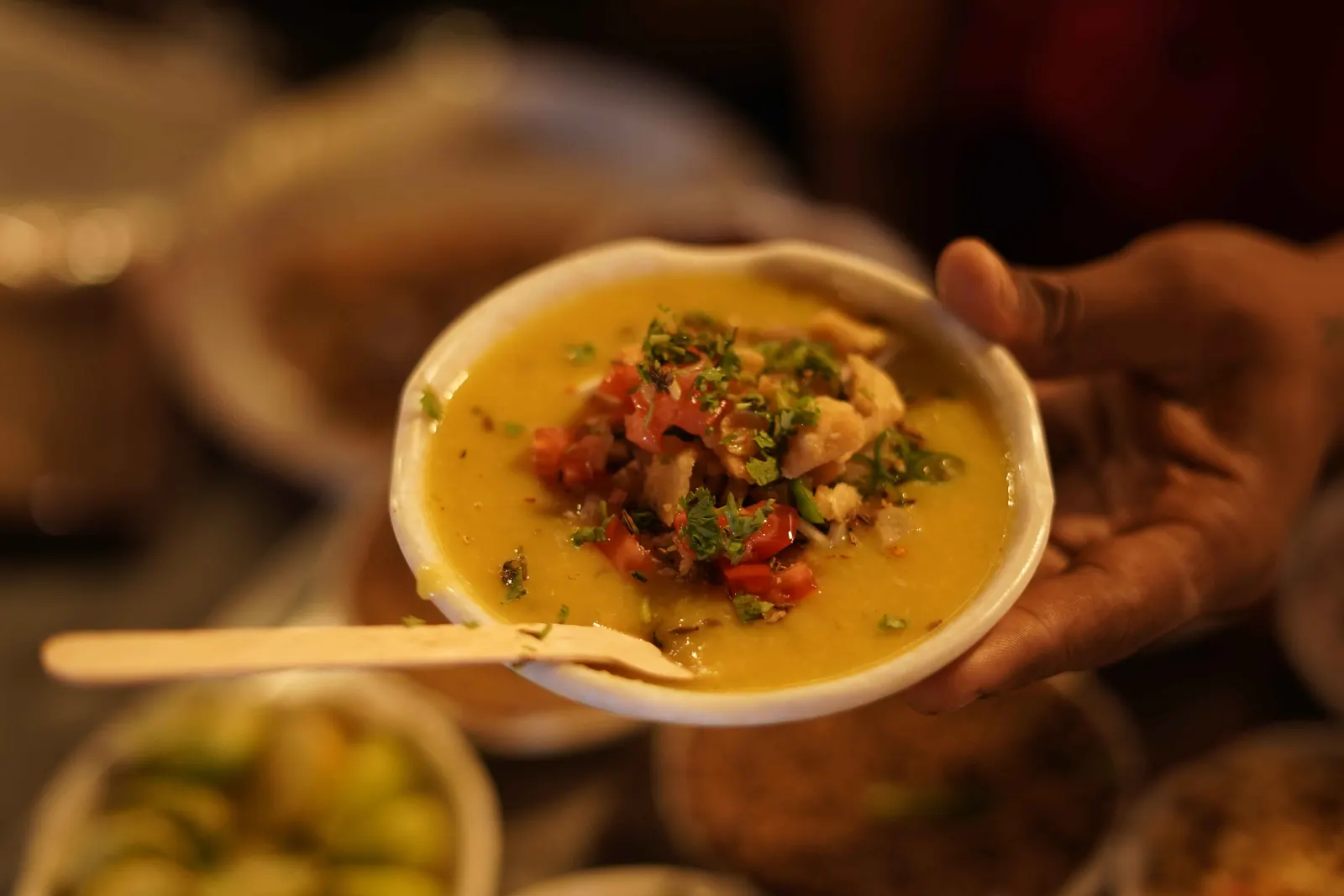
For most Lucknow weddings, the menu that works best is an Awadhi core with one properly run international section. It beats a pure multi-cuisine spread, which spreads the kitchen thin, and it beats a fusion-led menu, which asks guests to gamble on the one meal they came expecting to love.
People often ask us who the best caterers in Lucknow are for Awadhi, multi-cuisine and fusion food. We will not rank other businesses: we have no fair way to judge kitchens we have never worked in, and a list that pretended otherwise would be advertising. What we can rank from the inside is the menus themselves. These are five ways to build a wedding or event menu in this city, ordered by how reliably each one lands on the night. If you are comparing caterers rather than menus, start with the ten standards we would judge any Lucknow caterer against.
How we ranked the menus
Four tests, each of which a menu can pass or fail regardless of who cooks it.
- Does it hold for three hours? A wedding buffet opens at eight and guests are still arriving at eleven. Food that is only at its best in the first ten minutes loses.
- Does it fit the guest list? A Lucknow wedding often seats grandparents who want the food they grew up with at the same tables as cousins who flew in from Bengaluru or Dubai. A good menu feeds both without either feeling like an afterthought.
- How much can go wrong? Every extra cuisine is a separate set of techniques, ingredients and cooks. More moving parts means more places for a dish to arrive tired.
- Will anyone remember it? Safe and forgettable is not a win either. The menu should have at least one thing guests talk about on the way home.
Five menu styles, ranked
1. An Awadhi core with one international section
This passes all four tests, which no other style on the list does. Local guests get what they came for: kebabs, a korma, dal, a biryani finished on dum, sheermal and roomali roti off a live tawa, and phirni to close. Guests who want something else get a real alternative rather than a token one, whether that is Continental, Italian or pan-Asian. The kitchen stays focused on two areas instead of five.
The important word is one. A single international section cooked by people who cook it every week beats three thin ones. We explain what that section costs to run in our guide to catering service formats by budget.
2. A pure Awadhi spread
The full Nawabi meal, with nothing borrowed from outside Lucknow. It is the right choice when the guest list is mostly local, for a nikah dinner or a walima, or for any family function where tradition is the point. When it is cooked well, nothing else on this list tastes as much like an occasion.
It ranks second only because it leaves nobody an exit. A guest who does not eat rich food has few options, and vegetarian guests need their own Awadhi line, such as paneer pasanda, vegetarian galouti and kathal biryani. Offering them a bowl of dal makhani as consolation is not enough.
3. A balanced multi-cuisine menu
North Indian, South Indian, Continental, Chinese and Italian, a few dishes of each. This is the right answer for corporate events, conferences and receptions where the guest list is genuinely mixed and nobody is there to judge the korma against their grandmother's.
It ranks third because breadth costs depth. Five cuisines at three dishes each is fifteen dishes that need five different skill sets, and the weakest section usually sits right next to the best one. If you choose this style, cut hard: our piece on how many dishes a menu should actually have applies twice over.
4. A fusion-led cocktail or sangeet menu
Small plates for a standing, younger crowd with drinks in hand. This is where fusion earns its place. Guests eat in bites, they are in the mood to try something, and a dish that misses costs one bite, not a dinner. A galouti served on a crisp base, a chaat reworked as a canape, or phirni set in a tart shell all belong here.
5. A fusion-led main wedding dinner
Last, and not because fusion is bad food. The main wedding dinner is the one meal where most guests want certainty. When the biryani arrives reinvented, the older guests do not complain. They quietly eat less. Keep fusion for the edges of that evening: a starter tray, a dessert counter, a signature drink.
The rule under the ranking: let tradition carry the main meal and let novelty carry the edges. Starters, desserts and drinks are where a menu can afford to take risks. The main course is not.
Which Awadhi dishes hold on a buffet, and which need a counter
Much of Awadhi cooking suits a long buffet unusually well, because it is built on slow cooking. Its most famous dishes are the exception, and that changes how an Awadhi menu has to be laid out.
- Dishes that hold well: biryani kept sealed in its handi and opened in batches, kormas, dals and most vegetarian gravies. They are cooked slowly to begin with and tolerate gentle, steady heat for hours.
- Dishes that need a live counter: galouti and kakori kebabs, which are so soft they dry out and break apart under a warmer, and the breads. Roomali roti stiffens within minutes of leaving the tawa, and sheermal and warqi paratha are far better warm.
- Desserts that can be made ahead: phirni set in clay cups and shahi tukda both portion cleanly and serve well chilled or at room temperature, which is why they suit large crowds.
In practice, an Awadhi menu needs at least one live counter for kebabs and breads, and that counter belongs in the plan and the budget from the start. Our guide to live food counters that earn their space covers where to put it so the queue does not swallow the dining area.

Testing a caterer on each style
Every caterer in Lucknow will tell you they do all three styles. The tasting is where you find out which one they actually do.
- For an Awadhi menu: taste the galouti straight off the tawa, and taste a korma that has been held hot for an hour, not one plated the moment you sat down. Ask how the biryani is cooked. A real dum answer involves a sealed handi, not rice and gravy mixed together at the counter.
- For a multi-cuisine menu: taste the cuisine furthest from the caterer's core, not the one they lead with, and ask who cooks it on the day.
- For fusion: ask what each fusion dish replaces and what the fallback is for guests who will not try it. A caterer who has thought about the menu will have an answer ready.
Take a written list of what you tasted into the conversation about the contract. Our wedding catering checklist covers what else to settle at the tasting.
Matching the menu to the function
A Lucknow wedding is several events, and they do not all want the same menu. A rough mapping, based on what tends to work.
- Mehendi or haldi, usually daytime: lighter food. Chaat, a lighter Awadhi selection and cold drinks work better than a full spread of kormas in the afternoon.
- Sangeet or cocktail evening: style four, fusion small plates, with one familiar live counter for guests who want a proper meal.
- The wedding dinner: style one, or style two if the guest list is mostly local and the family wants a traditional table.
- Reception or walima: style one, moving towards style three if many guests are travelling in from outside Uttar Pradesh.
- Corporate events: style three, kept short. See corporate catering.
If you would rather have this worked out for your own event, tell us the functions, the venue and a rough picture of who is coming, and we will suggest a menu style before we suggest a single dish. Get a menu and quote, or browse the service styles we run.
Questions we get asked
What is Awadhi cuisine?
Awadhi cuisine is the cooking tradition of Lucknow and the old Awadh region, shaped by the kitchens of the Nawabs. It is known for slow dum cooking in sealed pots, finely textured kebabs such as galouti and kakori, rich but mildly spiced kormas, fragrant biryani, and breads such as sheermal. It is refined rather than fiery.
Can an Awadhi wedding menu be fully vegetarian?
Yes. The techniques that define Awadhi cooking, slow dum cooking, fine textures and gentle spicing, work with vegetables, paneer and jackfruit as well as meat. Vegetarian galouti, paneer pasanda, kathal biryani and vegetable kormas give a vegetarian guest list the same style of meal rather than a set of substitutes.
Is fusion food a good idea for a Lucknow wedding?
In the right places. Fusion works well for starters, desserts, drinks and a cocktail or sangeet evening, where guests eat in small bites and a dish that misses costs little. It is a poor choice for the main wedding dinner, which is the one meal where most guests want food they already know they love.
How many cuisines should a multi-cuisine menu have?
Fewer than most people expect. Every cuisine needs its own techniques, ingredients and ideally its own cook. For most events, the Indian core plus one or two international sections done properly serves a mixed guest list better than five sections with three dishes each.

Anil Caterers, Lucknow
Catering weddings, corporate events and private parties across Lucknow since 2000, under founder and executive chef Anil Gupta. More about the kitchen.