Two or three live counters will keep a 300-guest wedding busy all evening. A fourth and fifth mostly stand idle. Counters do not add guests; they divide the guests you have. Past a point you are paying cooks to watch an empty station while the chaat counter two metres away has a queue.
That is the whole argument, but the choice of which counters matters as much as the number. Here is how we think about it.
What a counter actually costs you
A live counter is never a single line on a quote. Each one brings four separate costs, and only the first is obvious.
- A cook, for the whole evening, not just for the time anyone is queueing
- Equipment: a griddle, tandoor, fryer or freezer, and the gas or power to run it
- Floor area: the station itself, plus queue space that does not block a walkway
- Attention: a counter running badly is more visible than a buffet tray running low
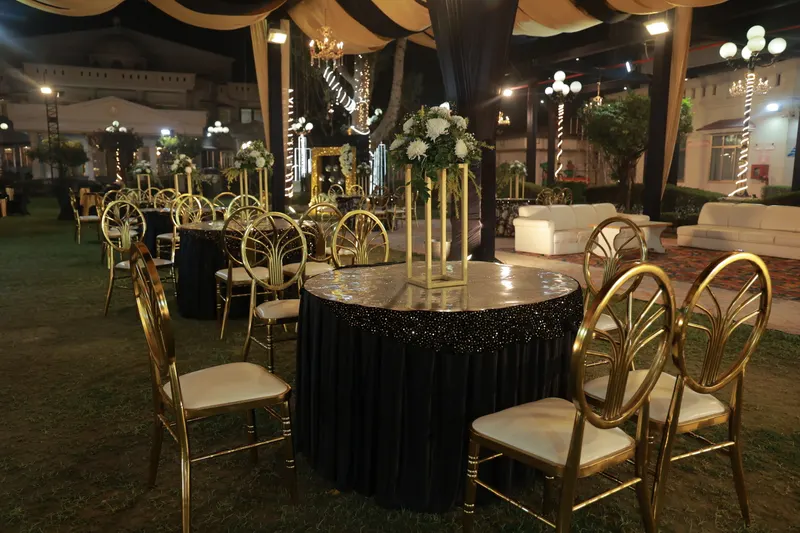
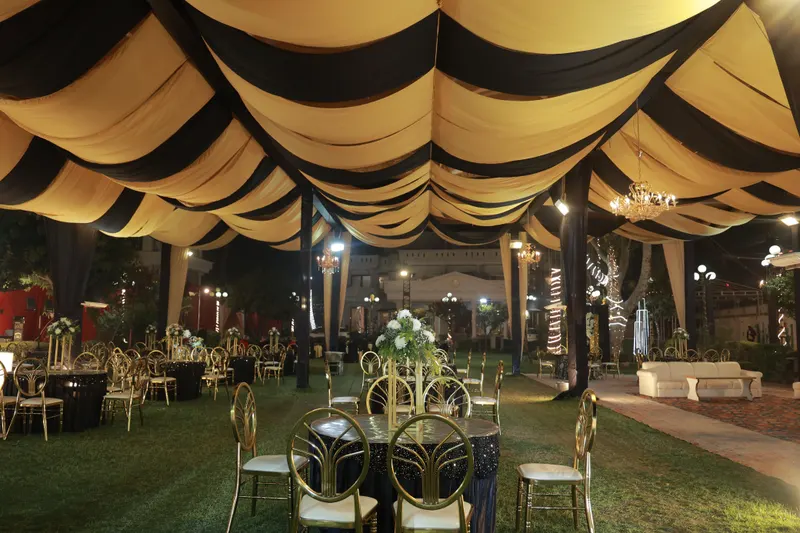
At a lawn venue with no built services, the power and gas part of that list becomes a generator conversation. Worth raising before you finalise the counter count. See what wedding catering costs in Lucknow.
Counters that reliably draw a crowd
These earn their place at almost any Lucknow function, in roughly this order.
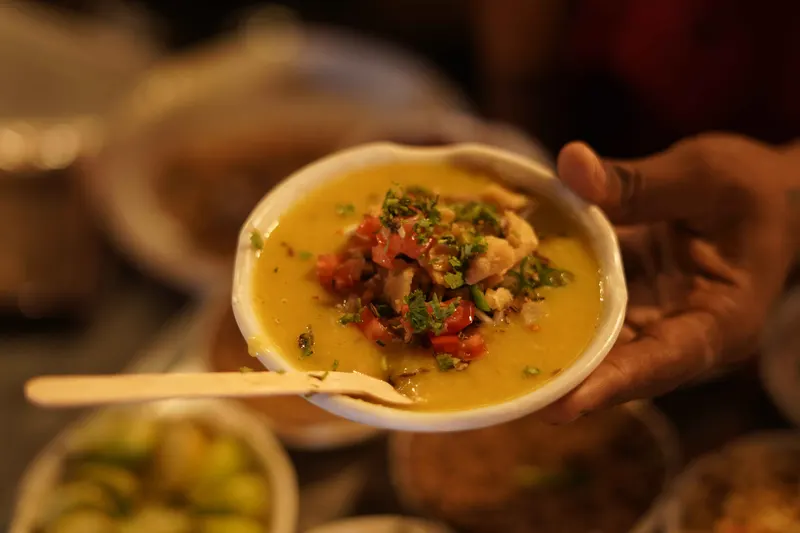
Chaat
The most dependable counter we run. Every age group eats it, it serves fast, and the queue moves because nothing is cooked to order for long. If you book one counter, book this one.
Tandoor and kebab
The natural second, and the one that does most for the smell and theatre of an evening. It is slower per plate than chaat, so give it room for a longer queue and open it early.
Live breads
Not glamorous, but it does real work. Hot roti and naan coming off the tawa beside the main buffet lifts the whole meal, and it takes pressure off the kitchen holding breads warm.
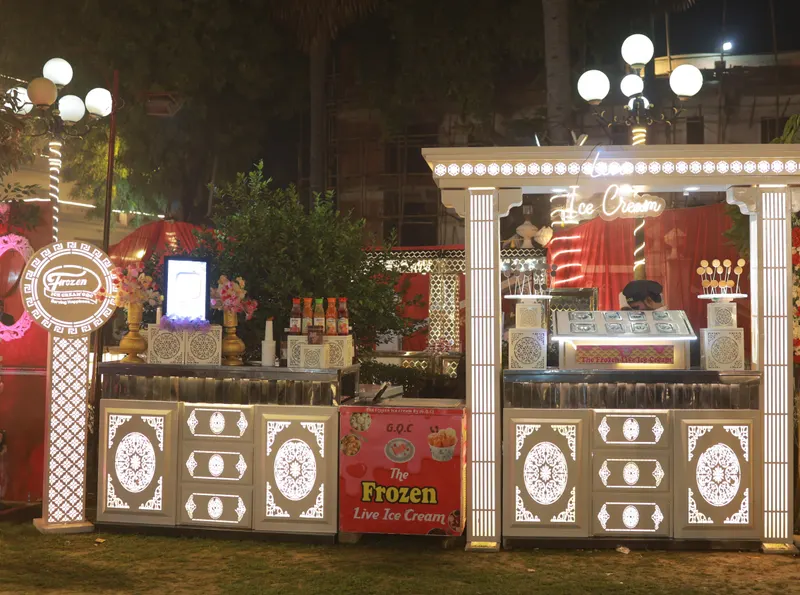
Dessert and ice cream
The counter that keeps people at the venue after dinner. A live jalebi, rabri or ice cream station late in the evening gives guests a reason to stay, which matters more than it sounds when a reception is winding down.
Counters that depend on the crowd
None of these are bad. They are just conditional, and worth thinking about honestly before you book them.
- Pasta and continental: excellent at a corporate event or a younger sangeet crowd, frequently quiet at a traditional reception where guests came for Indian food.
- Pan-Asian and momo: strong with a younger crowd, and a good fit for a cocktail evening. Less so at a lunch.
- South Indian: a genuine crowd-puller at daytime functions and mehndi, less so as an evening counter alongside a full dinner.
- Mocktail and beverage bars: these work almost everywhere, but they are a service point rather than a food counter. Do not count one towards your two or three.
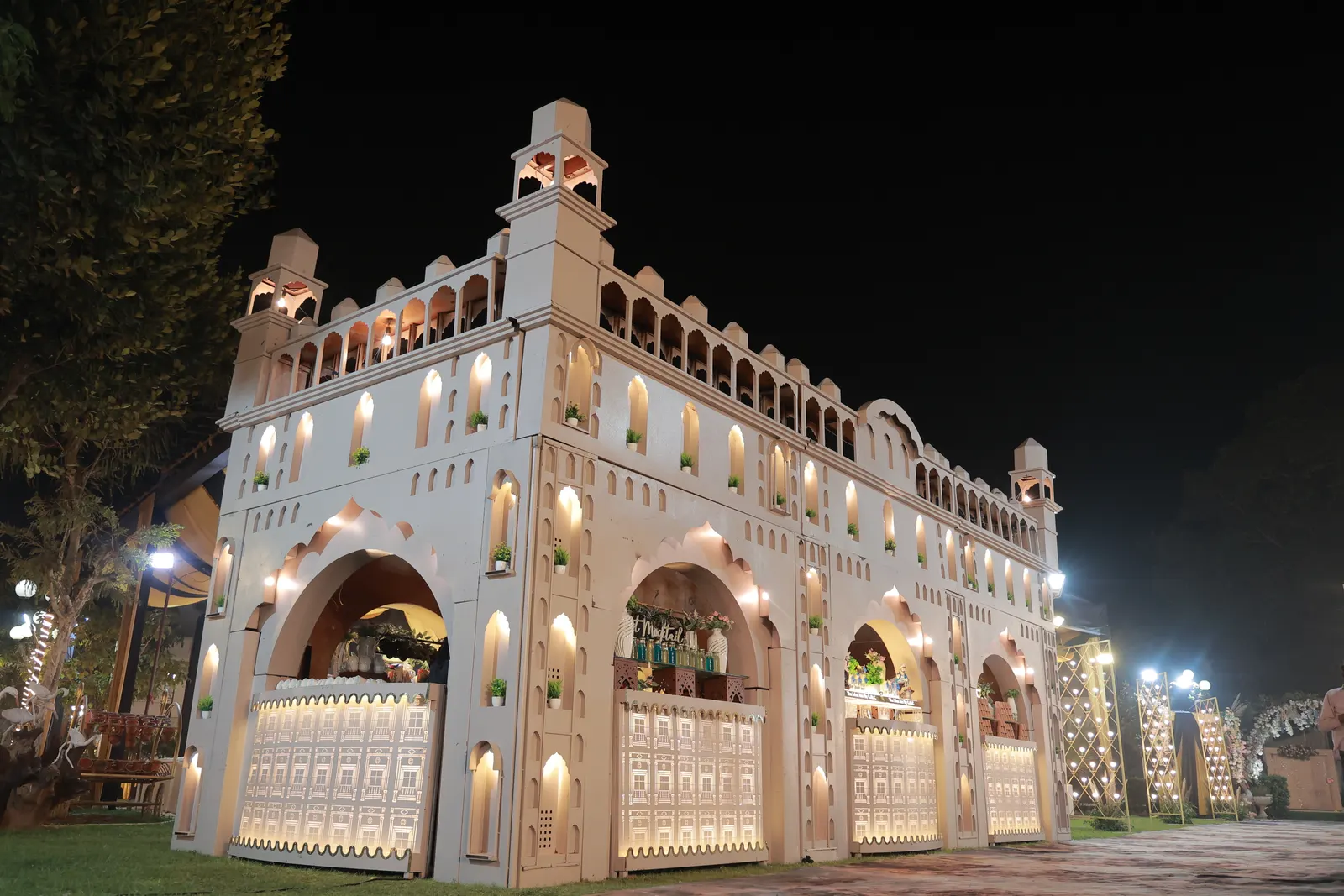
- Themed or heavily decorated facades: beautiful in photographs, and they cost setup time and floor space. Worth it for one counter, rarely for all of them.
The rule we use: one counter that guests queue at all evening beats three they glance at. If you cannot say who at your wedding will walk across the hall for a particular counter, that counter is decoration.
Placing counters so the queue works
Where a counter stands decides whether it works. Four things we look at during the venue walk-through.
- Spread them out. Counters clustered together create one congested corner and one empty hall.
- Keep queues off walkways. A queue that crosses the route between seating and the buffet slows both.
- Keep them off the stage sightline. Guests should not have to choose between the counter and watching the couple.
- Put one counter deliberately far from the entrance. It pulls guests through the space instead of letting everyone bunch at the door.
Opening and closing times
Stagger the counters rather than opening everything at once. A workable evening looks like this: snack counters during the welcome and pre-dinner period, the main buffet through the middle of the evening, and dessert opening as the buffet winds down.
Whatever pattern you choose, put the running hours for each counter in the written agreement. "Live counters included" without times is the single most common source of disappointment on the night. It is on our wedding catering checklist for exactly that reason.
Questions we get asked
How many live counters does a wedding need?
Two or three keep a 300-guest wedding busy for a full evening. Each extra counter competes with the others for the same guests, so beyond three you tend to pay for cooks and equipment standing idle rather than for a better evening.
Which counter works best at an Indian wedding?
Chaat, by a distance. It is quick to serve, familiar to every age group, and the queue keeps moving. Tandoor or kebab is the usual second choice, and a live dessert station works well late.
Do counters need extra space and power?
Yes. Each one needs floor area for the station plus queue space that does not block a walkway, a cook for the evening, and usually a power or gas supply. At a lawn venue with no built services that means generator capacity planned in advance.
Can we add a counter close to the date?
Sometimes, but it depends on equipment availability and whether the venue can take the extra load and floor space. Ask early rather than on the week, and if you are unsure, tell us at booking so we can hold the option open.

Anil Caterers, Lucknow
Catering weddings, corporate events and private parties across Lucknow since 2000, under founder and executive chef Anil Gupta. See our live counter setups.