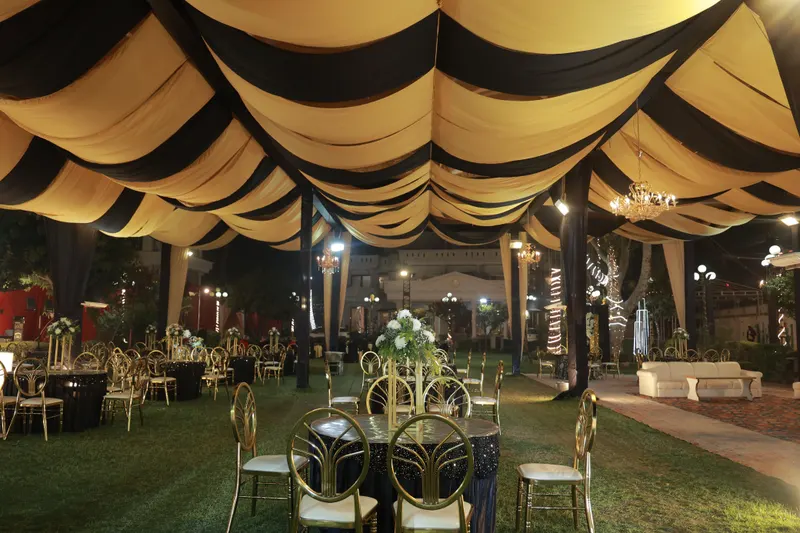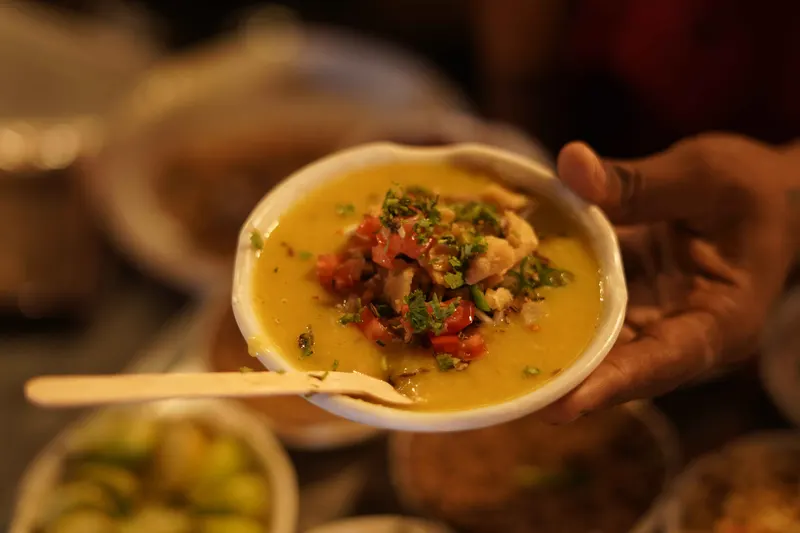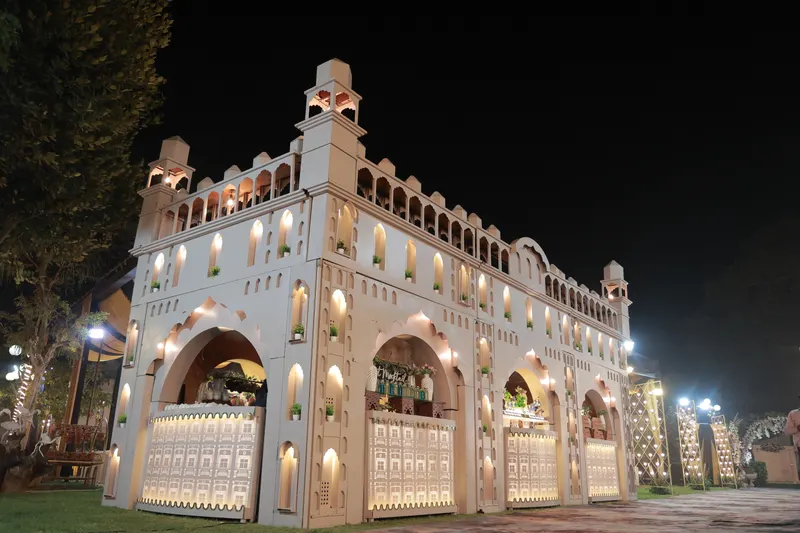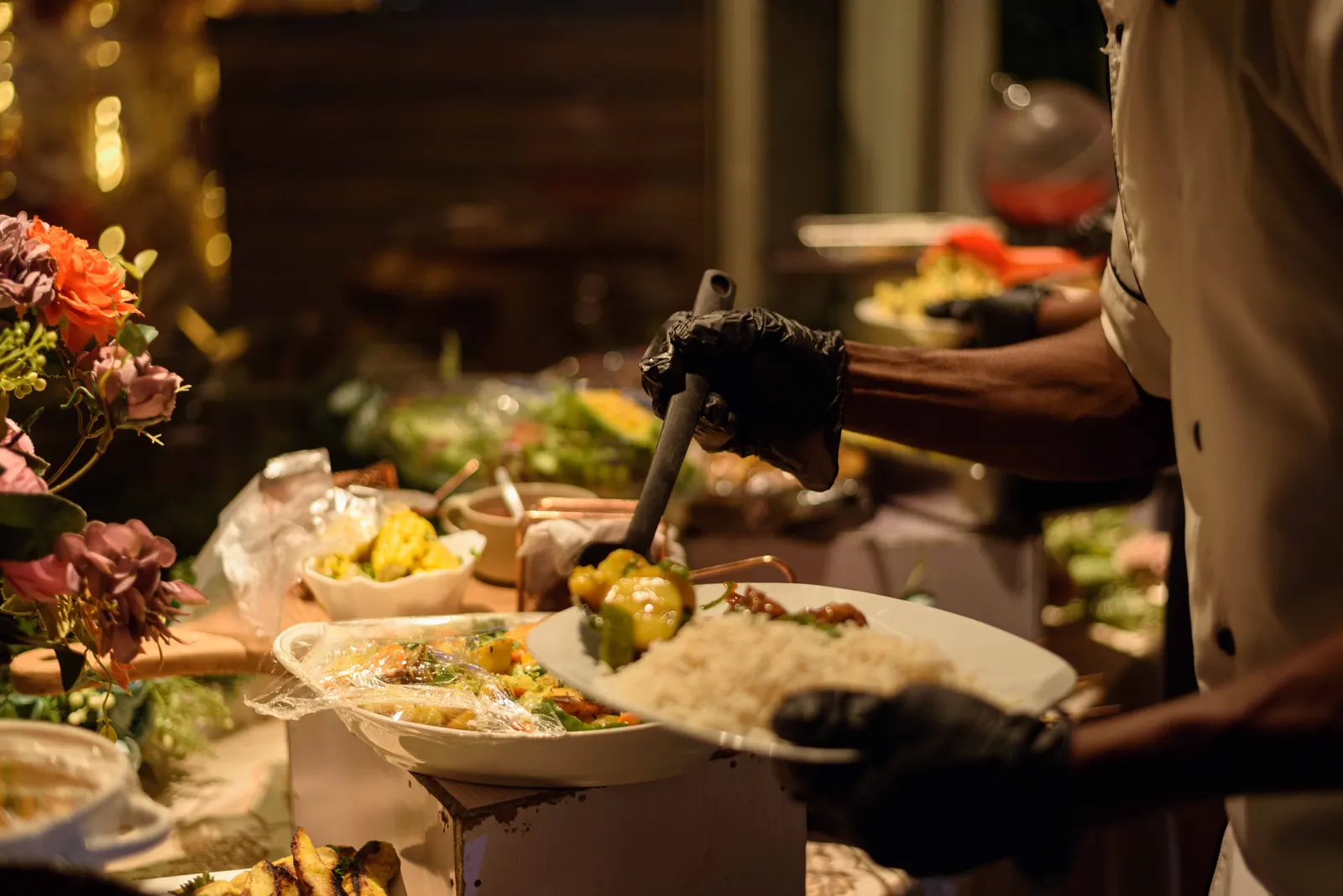
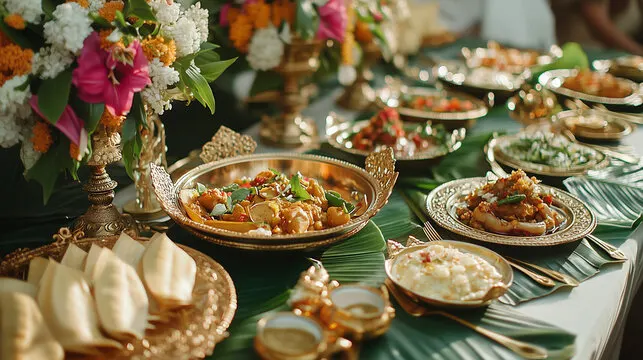
For a typical Lucknow wedding reception, a spread of roughly eighteen to twenty-two dishes across all courses reads as generous and still cooks well. Past that, you are not buying a better meal. You are buying more warmers, more serving positions and more chance that something reaches a guest lukewarm.
Families often arrive with a menu of forty dishes because a relative insisted a smaller list would look mean. It will not. What guests remember is whether the biryani was good and whether the queue moved, not whether there were three paneer preparations or one.
A working structure for a reception buffet
This is the shape we recommend as a starting point for a full reception dinner. Treat it as a frame to adjust, not a fixed rule.
- Welcome drinks: two options, one of them non-sweet
- Starters: four to six, split across vegetarian and, if you are serving it, non-vegetarian
- Main vegetables: two to three, with different bases so they do not taste alike
- A paneer or non-vegetarian main: one, done properly
- Dal: one, and make it the good one
- Rice: a biryani or pulao, plus plain rice
- Breads: two or three, at least one made live
- Salads, raita, papad, chutneys: the accompaniments that make a thali feel complete
- Desserts: two or three, with one served warm
Add two or three live counters on top of that and you have a menu that keeps a large hall fed and moving. We cover which counters are worth it in live food counters: which ones earn their space.
Why a longer menu often eats worse
The argument against a very long menu is not about money. It is about what happens in the kitchen and at the counter.
- Appetite is fixed. A guest eats about the same amount whether you offer twelve dishes or forty. More dishes means smaller portions of each, more untouched trays and more waste.
- Attention is finite. Every dish needs someone watching it, topping it up and keeping it at temperature. Spread the same kitchen across twice the dishes and each one gets half the care.
- Counters get crowded. A long menu needs a long counter, which lengthens the queue and slows everyone down. Guests blame the caterer for the wait, not the menu they asked for.
- Dishes start to repeat. Beyond a point, new items are variations of ones already on the table. Three similar gravies read as one dish to a guest.
A useful test: read your menu aloud and mark any two dishes a guest could not tell apart by description. Every pair you find is a dish you can cut without anyone noticing, except the kitchen, which will cook the rest better.
Sizing the menu by function
A wedding weekend is several different meals for several different crowds. Repeating one dish list across all of them is the fastest way to make a long weekend feel monotonous.
Mehndi and haldi
Daytime, informal, people moving around. Chaat, light snacks, one substantial item and good drinks do more than a full buffet that nobody sits down for.
Sangeet and cocktail evening
Guests are standing and grazing between performances. Tray-passed starters and two counters beat a static buffet here; a full dinner arriving mid-programme kills the room.
Baraat and welcome
Short, high-energy and outdoors. Welcome drinks and two or three handheld snacks. Nothing that needs a plate and a fork.
Reception
The one full meal of the weekend, and where the structure above belongs. This is the menu guests will describe afterwards, so spend the budget here.
What to cut first
When a menu needs trimming, cut in this order. It removes cost and complexity without touching anything a guest will miss.
- The third and fourth gravy that shares a base with an existing one
- Any dish added only because another family suggested it
- The second dessert of the same type: two cold sweets, or two milk sweets
- Continental items nobody at an Indian wedding reception reaches for
- A live counter with no natural queue: an extra one always looks emptier than the first two
Put what you save into raw material and staffing on the dishes that remain. That trade is the single best return in the whole menu. See what wedding catering costs in Lucknow for how the numbers move.
Questions we get asked
How many dishes are enough for a wedding buffet?
Roughly four to six starters, two to three main vegetables, one paneer or non-vegetarian main, one dal, two rice options, two or three breads, salads and accompaniments, and two to three desserts. That is a full spread that the kitchen can still cook and hold properly.
Does a longer menu mean guests eat more?
No. Guests eat about the same volume whatever the menu length. A longer list spreads the same appetite across more dishes, which means smaller portions of each, more leftovers, and a higher chance some dishes sit untouched.
How many live counters should we have?
Two or three keep a 300-guest wedding busy all evening. Beyond that, counters compete for the same guests, so some stand idle while you still pay for the cook, the equipment and the floor space.
Should the menu change between functions?
Yes. A sangeet crowd is standing and grazing; a reception crowd sits and eats a full meal. Different formats want different menus, and varying them is what stops a three-day wedding tasting the same on day three.

Anil Caterers, Lucknow
Catering weddings, corporate events and private parties across Lucknow since 2000, under founder and executive chef Anil Gupta. More about the kitchen.