Wedding catering in Lucknow is quoted per plate, but the plate rate is an output, not an input. It is calculated from your guest count, menu length, service style, number of live counters and what your venue does or does not supply. Understand those five inputs and you can read any quote in the city.
This guide explains the pricing structure honestly, including why we do not publish a fixed rate card and why you should be sceptical of any caterer who does.
How wedding catering is priced in Lucknow
Nearly every quote you receive will be built from three kinds of charge. Knowing which is which is most of the work.
Charged per plate
The meal itself, every dish across starters, mains, breads, rice, accompaniments and dessert, is priced per guest. Service staff are usually folded into this figure, which is why the number of stewards included is the question families most often forget to ask.
Charged per counter
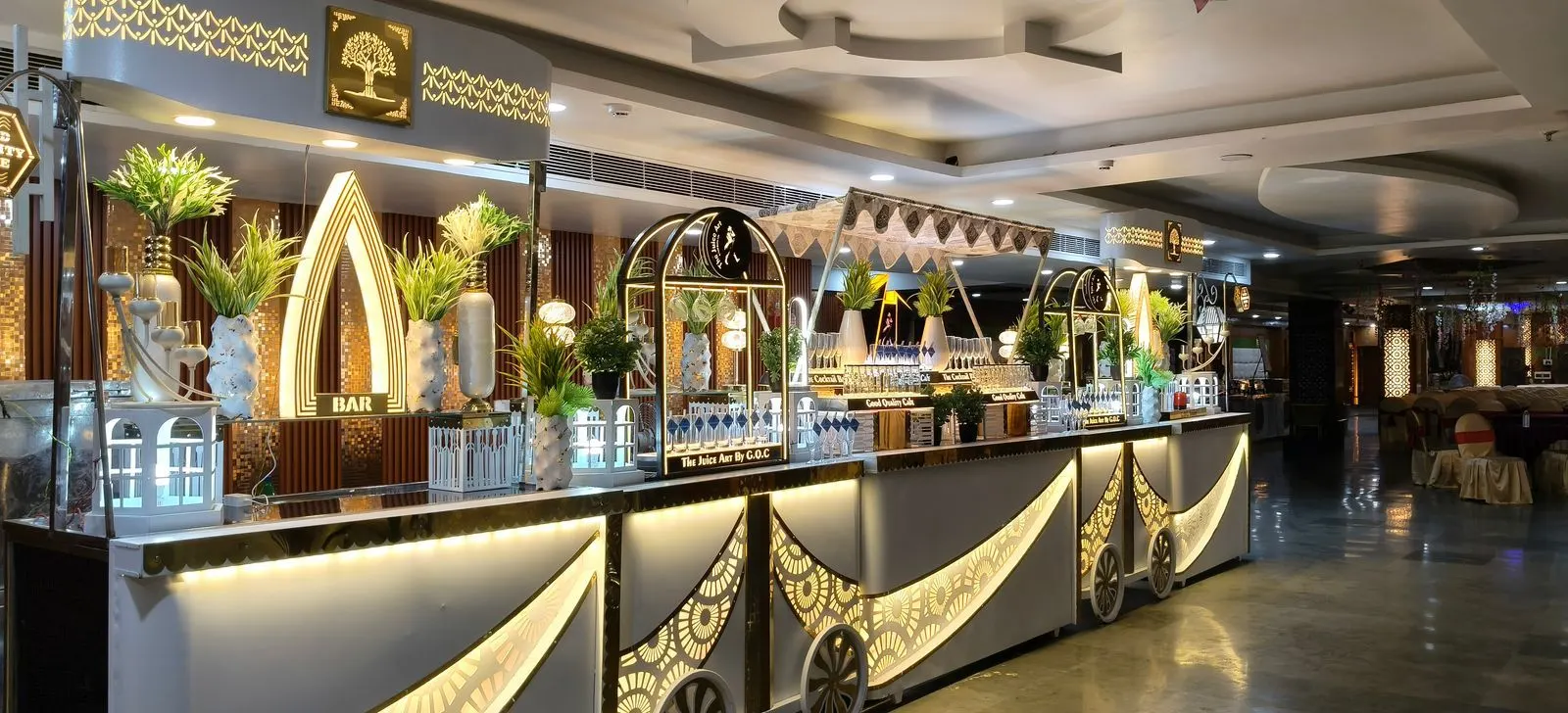
Live counters sit outside the plate rate, either as a flat charge per counter or as a smaller per-plate add-on. Each counter carries a cook for the full evening plus its equipment, so the charge does not fall much if only half your guests visit it.
Charged flat
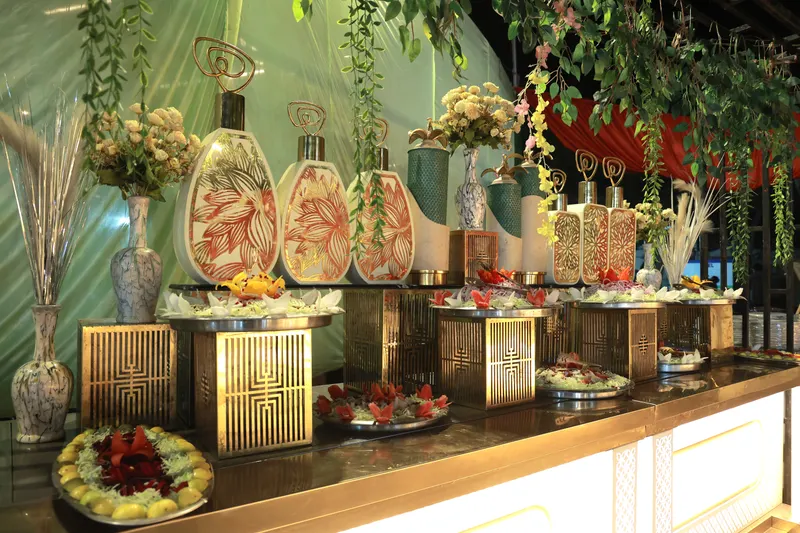
Equipment, crockery, cutlery, glassware, linen, warmers, transport, generator or gas where the venue has none, and any decorative counter facade or themed setup. These are event costs rather than guest costs, and they barely change whether you have 250 guests or 300.
Why no honest caterer publishes a fixed rate card: a single per-plate number has to assume a menu, a service style, a counter count and a venue. Publish it low and it will be revised once the real brief arrives; publish it high enough to cover every case and you are quoting everyone for the hardest possible event.
The five levers that move your quote
1. Guest count, and how accurate it is
Guest count multiplies everything else, so it is the most expensive thing to get wrong. Cooking for 400 when 300 arrive wastes food you paid for. Cooking for 300 when 400 arrive means the last tables get a thinner spread, and that is what people remember.
Use a two-stage count: a planning figure at booking and a confirmed figure at a fixed deadline a few days before the event. Ask what that deadline is and what the price does if the number moves after it.
2. Menu length, not menu luxury
Most families assume expensive dishes drive the bill. In practice menu length does more damage. Each extra dish brings its own preparation, a serving position, a warmer and someone to watch it, while guests eat roughly the same volume regardless. We work through the sizing in how many dishes your wedding menu should actually have.
3. Service style
Service style is really a question about people, and staff is a significant share of any quote.
- Buffet: the lowest staff ratio, which is why it is standard at large Lucknow weddings
- Tray-passed and mini plate samplers: more stewards, better portion control, well suited to sangeet and cocktail evenings
- Seated plated service: the highest staff ratio, and the format that most changes how an event feels
Mixed formats are normal (tray-passed starters, a buffet main, a plated dessert), but each switch has a staffing cost. Decide the format before you collect quotes, or you will be comparing different events.
4. Live counters
Two or three counters keep a 300-guest wedding busy all evening. Six leaves half of them idle while you still pay the cooks. Which ones work, and where to place them, is covered in live food counters: which ones earn their space.
5. Venue logistics
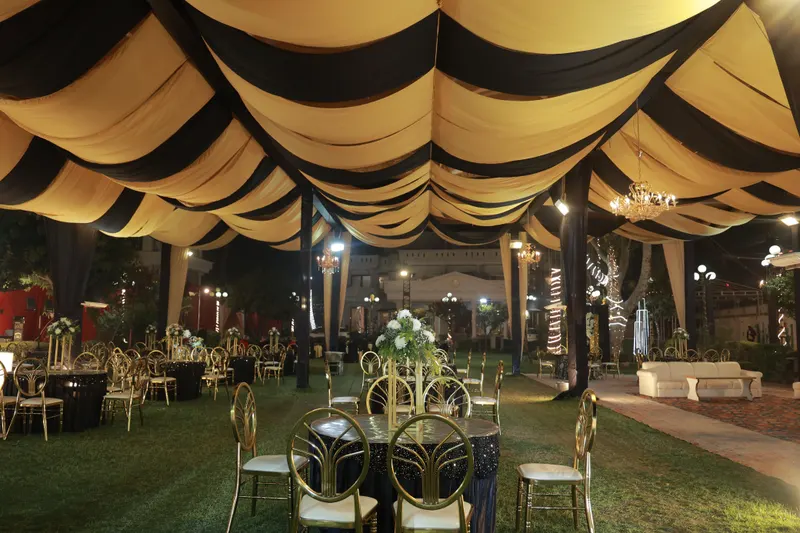
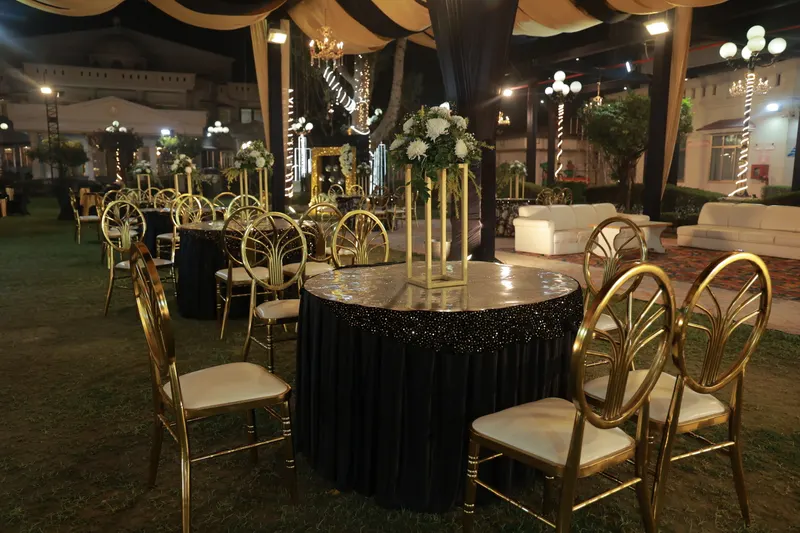
The same menu costs differently at a banquet hall and on a private lawn, and the difference has nothing to do with the food. What the venue provides is what the caterer does not have to bring.
- Prep space, water and power on site, or the lack of it
- Distance from the caterer's kitchen, and loading access
- How far food travels from prep area to counter once it is hot
- How much time the venue allows for setup and clearing
- Whether the venue restricts outside catering or charges for it
What we charge, and how to get a figure
We quote per event, itemised by function, rather than from a rate card. A quote from us states the assumed guest count, the full dish list for each function, the service style and staff included, each live counter with its running hours, the equipment and crockery included, setup and clearing times, and what happens to the price if the headcount moves.
To get a figure, we need four things from you: the date, the venue, the guest count per function, and whether the menu is vegetarian, non-vegetarian or mixed. With those, a quote is usually a short conversation rather than a long negotiation.
Comparing two quotes fairly
The headline per-plate figure is the least useful line on a quote. Compare on these instead.
- Guest count assumed: are both quotes for the same number?
- Dish count and dish list: a shorter menu will always look cheaper per plate
- Service staff included at your guest count and format
- Live counters: how many, which, and running for how long
- Equipment and crockery: inside the plate rate or billed separately
- Headcount clause: what the price does if the number moves
- Payment schedule: what each instalment covers, and when the balance falls due
If one quote is markedly cheaper, one of those seven lines is different. Find which before you decide. It is usually the staff count or the counter hours.
Cutting cost without cutting quality
Four changes reduce the bill without changing what a guest tastes.
- Shorten the menu, do not downgrade ingredients. Cut two dishes and put the saving into the rice and the paneer.
- Reduce counters to two or three. The fourth counter costs a full cook and mostly stands quiet.
- Confirm an accurate headcount. Padding the number to be safe is the most expensive form of caution there is.
- Weigh venue services when choosing a venue. A hall with a working kitchen removes an entire equipment line.
What we would not cut: service staff. Understaffing does not show up in a quote and shows up very clearly at 9pm. If the budget must come down, take it out of the menu, not the floor.
Questions we get asked
How is wedding catering priced in Lucknow?
The meal is priced per plate, live counters are charged separately per counter or as a per-plate add-on, and equipment, crockery, transport and decorative setups are flat costs. Service staff are usually inside the plate rate, so always ask how many are included.
Why do two caterers quote very different prices?
Because the two quotes usually describe different events: different assumed guest counts, menu lengths, service styles, counter numbers, or assumptions about what the venue supplies.
What advance do caterers take?
Practice varies by caterer and season. What matters more than the percentage is that the schedule is written down, that instalments are tied to stages such as booking and final headcount confirmation, and that the balance falls due after the event.
Does the per-plate rate include crockery and staff?
It depends on the caterer, which is exactly why it must be asked. Get the number of service staff at your guest count and format, and confirm whether crockery, cutlery, glassware, linen and warmers sit inside the plate rate or are listed separately.
How do we reduce cost without losing quality?
Shorten the menu instead of downgrading ingredients, keep counters to two or three, confirm an accurate headcount rather than padding it, and prefer a venue that supplies kitchen space, power and water.

Anil Caterers, Lucknow
Catering weddings, corporate events and private parties across Lucknow since 2000, under founder and executive chef Anil Gupta. More about the kitchen.